How to Plan an Indian Wedding in 30 Days: The Last-Minute Checklist (2026 Guide)
How to Plan an Indian Wedding in 30 Days: The Last-Minute Checklist (2026 Guide)
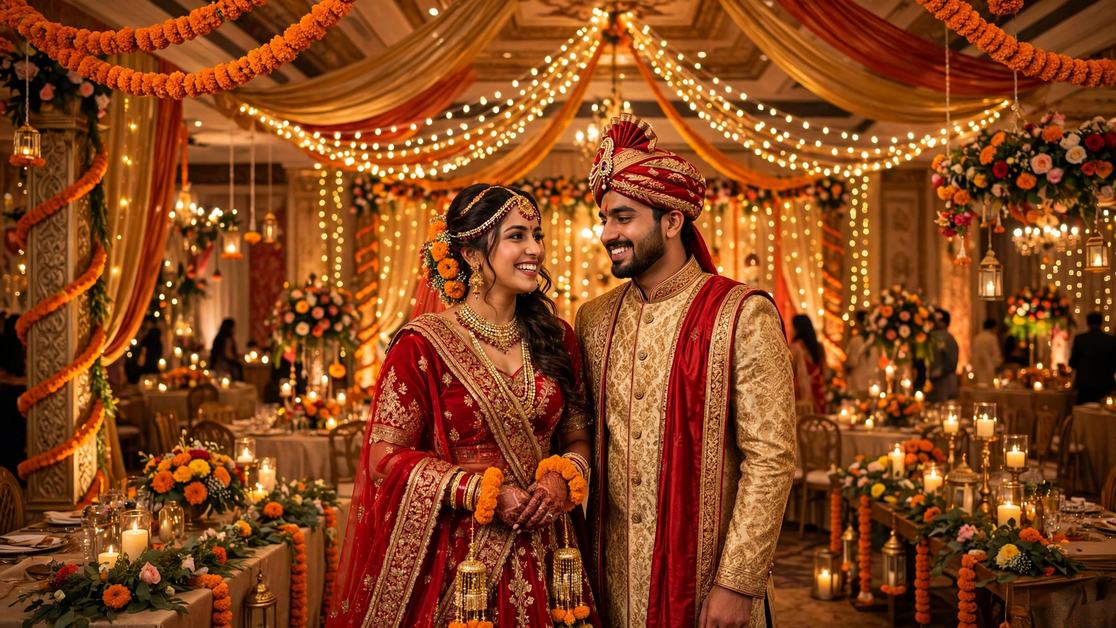
Planning an Indian wedding in 30 days sounds impossible — until you realise that most weddings are not delayed by a lack of time, but by a lack of decisions. If you have one month, a clear guest list and a willingness to book what is available rather than chase what is perfect, you absolutely can plan a beautiful, complete Indian wedding in 30 days. This last-minute wedding checklist breaks the month into four weekly sprints, so you always know exactly what to lock in, what to skip, and what to delegate.
The golden rule of a 30-day wedding plan is this: lock the non-negotiables in week one, protect your budget in week two, confirm every detail in week three, and use week four only for finishing touches. Couples who follow this order rarely panic. Couples who start with decor Pinterest boards and leave the venue to week three are the ones calling vendors in tears. Follow the order below, and your short-notice wedding will feel planned, not rushed.
Week 1 (Days 30–24): Lock the Non-Negotiables First
Week one is decision week. Everything in this section is hard to change later, so decide fast and move on.
1. Fix the date, venue and muhurat
Confirm the wedding date and an auspicious muhurat with your family pandit or priest first, then book the venue the same day. In a 30-day window, venue availability decides everything else — do not hold out for a dream venue that is booked. Shortlist three venues, visit them within 48 hours, and book the one that fits your guest count, budget and location. Ask upfront about in-house catering, sound limits, decoration restrictions and extra charges for extended hours, so there are no surprises later.
2. Freeze the guest list — and mean it
Write the final guest list in one sitting with both families. A 30-day plan cannot survive a guest list that keeps growing, because every extra 50 guests changes catering, seating, transport and invitation costs. Decide the rule once: for example, immediate family, close relatives and close friends only. Anyone added after week one must replace someone else, not simply join the list.
3. Book the big five vendors immediately
After the venue, book these five before anything else: caterer, photographer and videographer, decorator, makeup artist, and DJ or live music. These vendors book out fastest, and in a short window you should choose from whoever is available and well-reviewed rather than waiting for a favourite to reply. Ask each vendor for a written quote, the advance amount, the cancellation terms and exactly what is included, and get it all on WhatsApp or email — verbal promises are forgotten.
4. Send invitations on day one, not week three
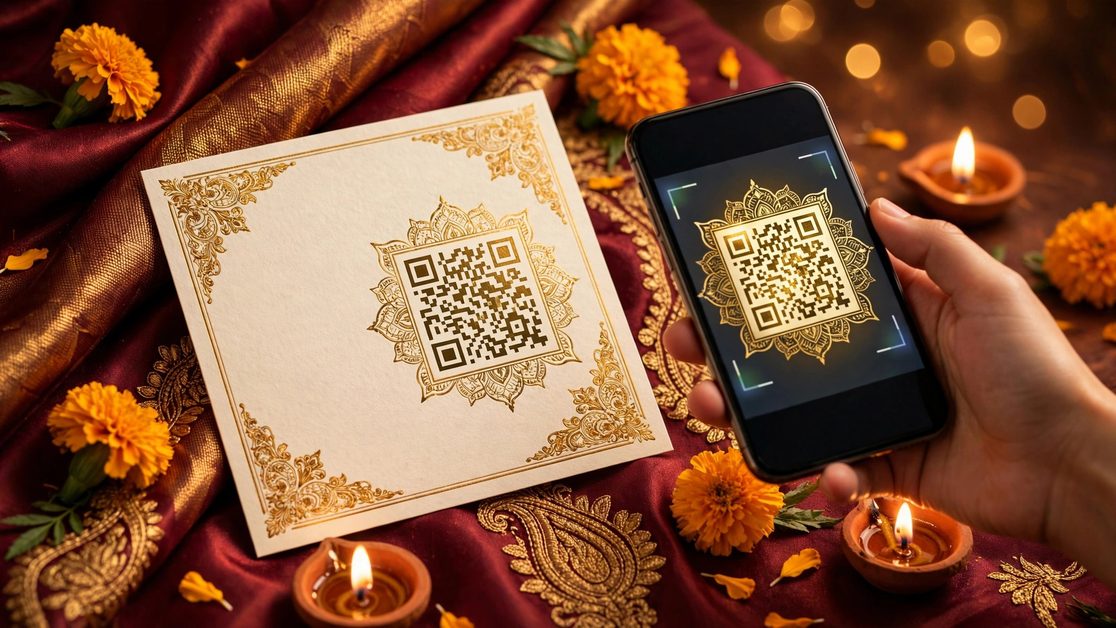
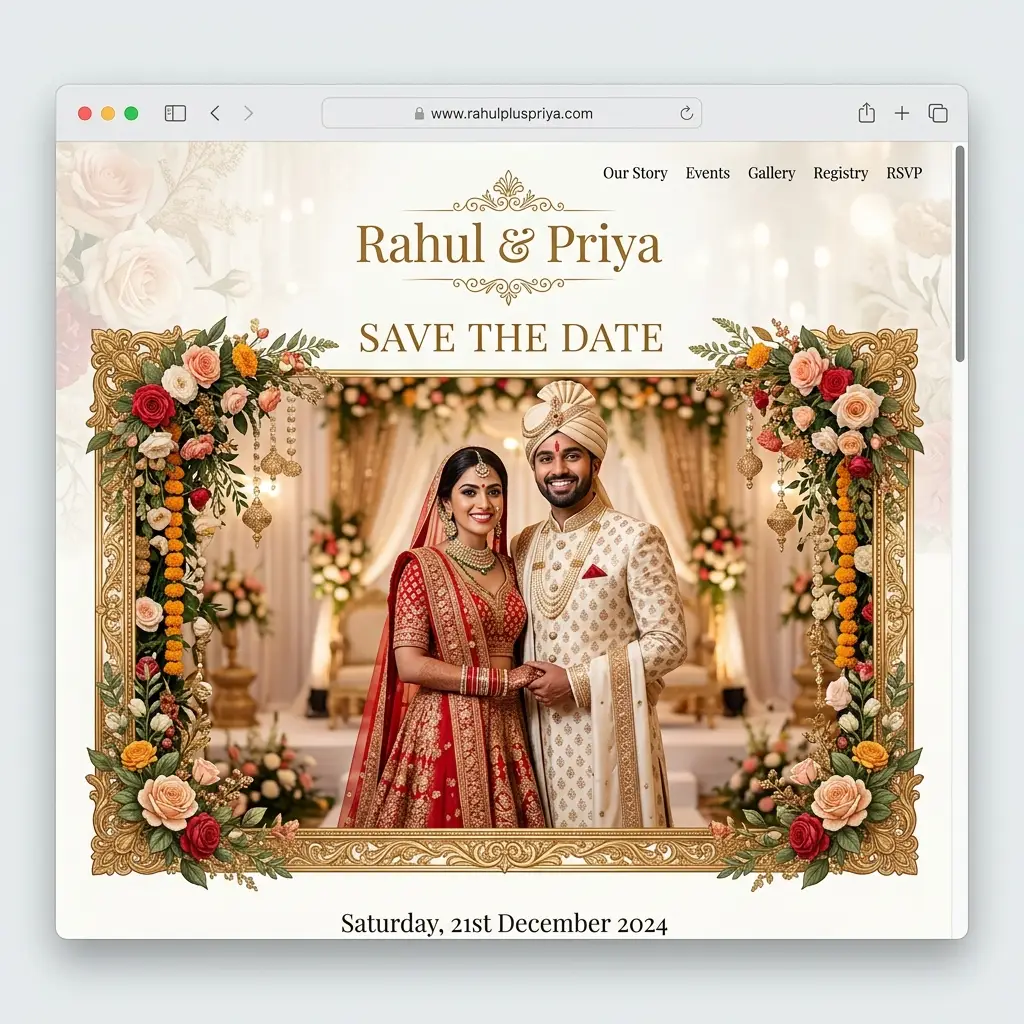
This is the single biggest time-saver in a 30-day wedding. Traditional printed cards take a week or more to print and deliver, which you do not have. A digital wedding invitation can be designed, approved and shared on WhatsApp the same day, with the venue map, event schedule and RSVP link built in. Send the digital invitation first to every guest, and print a small number of physical cards only for elders and close family who value them. Guests get the details instantly, and you get RSVPs back within days instead of weeks.
Week 2 (Days 23–15): Outfits, Food and Functions
With the venue and vendors locked, week two is about what guests will see, wear and eat.
5. Buy outfits off the rack or with express tailoring
Custom bridal lehengas can take months, so in 30 days you shop differently: ready-to-wear bridal collections, designer stores with in-stock pieces, and rental outfits for sangeet or reception looks. Book express tailoring the day you buy, and schedule two fittings — one in week two and one in week four. Grooms should buy or rent the sherwani in the same week, and both families should finalise their function outfits now, not later.
6. Finalise the menu and the function flow
Do the food tasting in week two and lock the menu, including Jain, vegetarian and allergy requirements. At the same time, write the function schedule: Haldi, Mehndi, Sangeet, Wedding and Reception, with start times, venues and who hosts each event. Share this schedule with every vendor so the decorator, photographer and caterer are all working from the same plan. A one-page event flow shared on the family WhatsApp group prevents most day-of confusion.
7. Book travel, stay and transport
If guests are travelling in, block hotel rooms now and share the booking details in the invitation itself. Book cars or buses for baraat and guest movement, and confirm airport or station pickups for outstation elders. In a 30-day plan, transport booked late is transport booked at a premium — or not booked at all.
8. Set the budget guardrails
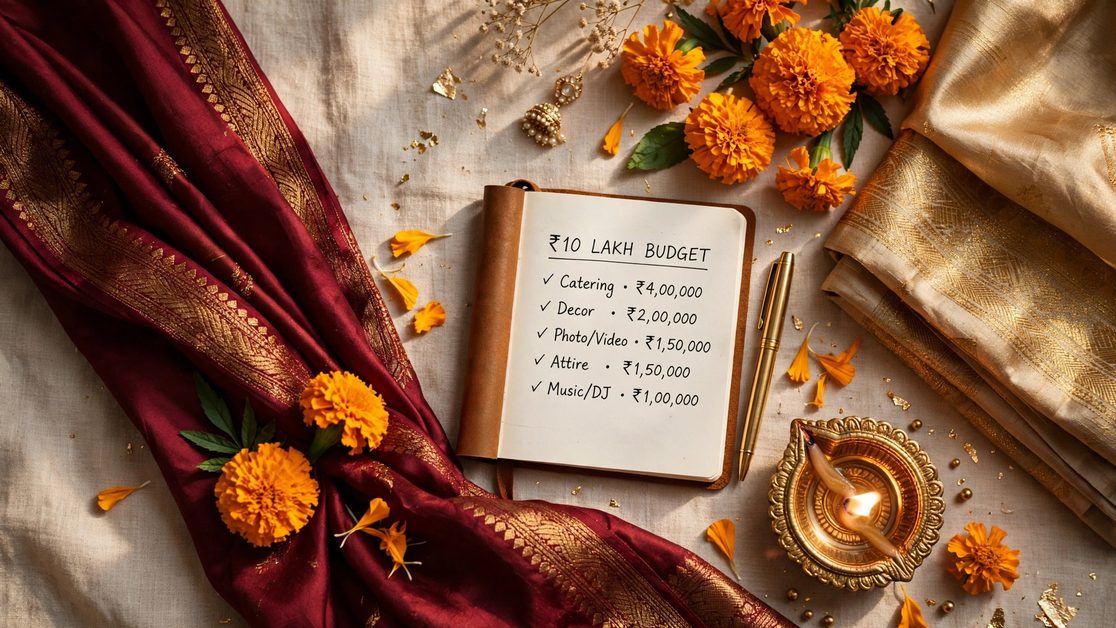
Write down a simple budget split before you sign anything else in week two: venue and catering usually take the largest share, followed by outfits, photography, decor and music. Keep a 10 percent contingency for last-minute additions, because there will be some. Every time a new expense appears, check it against the remaining budget before saying yes. A short wedding timeline only works if spending decisions stay as fast as the planning decisions.
Week 3 (Days 14–8): Confirm Everything, Twice
Week three is not for new ideas. It is for confirmations.
9. Chase RSVPs and finalise the headcount
Send a polite RSVP reminder in week three: a short WhatsApp message with the event dates and a reply deadline. Digital invitations make this easy, because guests can confirm with one tap and you can see exactly who is coming to which function. Give the caterer the final headcount, plus a small buffer of about 5 percent, by the end of this week. Late headcount changes are the most common reason catering bills balloon.
10. Reconfirm every vendor in writing
Call or message every vendor and reconfirm the date, time, venue address, deliverables and balance payment. Confirm the makeup artist's arrival time, the photographer's shot list, the decorator's setup time and the DJ's playlist restrictions. Pay scheduled advances on time — vendors prioritise clients who pay on schedule, and in wedding season that priority matters.
11. Plan the ceremonies and the small details
Meet the pandit or priest and confirm the rituals, the items needed for each ceremony, and the exact muhurat timings. Buy puja items, garlands and gifts for the wedding party this week. Prepare the wedding favours, the welcome kits for outstation guests, and the return gifts. Small items bought in week three are calm errands; the same items bought in week four become emergencies.
12. Prepare the music, dance and speeches
Finalise the sangeet performances, the couple's entry song and the baraat playlist. If family members are performing, one rehearsal in week three is enough — keep performances short and joyful rather than perfectly choreographed. Collect speeches and toasts now, and keep them under three minutes each.
Week 4 (Days 7–0): Finishing Touches and the Wedding Days
Week four is execution, not planning. If something is not booked by now, it is either dropped or simplified.
13. Final fittings, beauty prep and packing
Attend the final outfit fitting, complete beauty and grooming appointments, and pack an emergency kit: safety pins, extra bobby pins, tissues, pain relief, chargers, a copy of the vows or speech, and comfortable shoes for after the ceremony. Pack the wedding-day bag the night before each function, not the morning of it.
14. Share the final schedule with everyone
Send one final message to guests with the venue address, map link, parking information, dress code and function timings. Send a separate detailed run-sheet to vendors, family coordinators and the wedding party, with contact numbers for the day. When everyone holds the same schedule, you stop being the information desk on your own wedding day.
15. On the day: delegate and enjoy
Appoint one trusted person per function as the point of contact for vendors, so questions do not all come to the couple. Keep the phone on silent during ceremonies, eat something before the events begin, and accept that one small thing will go differently than planned. Guests remember how a wedding felt, not whether the centrepieces matched the invitation exactly.
The 30-Day Wedding Checklist (Copy and Tick Off)
- Week 1: Date and muhurat confirmed; venue booked; guest list frozen; caterer, photographer, decorator, makeup artist and music booked; digital invitations sent.
- Week 2: Outfits bought and tailoring booked; menu tasted and locked; function schedule written; hotel rooms and transport booked; budget split written down.
- Week 3: RSVPs chased and headcount given to caterer; every vendor reconfirmed in writing; puja items, favours and gifts bought; sangeet rehearsal done.
- Week 4: Final fitting done; emergency kit packed; final schedule sent to guests and vendors; day-of coordinators appointed; balances paid.
What to Skip When Time Is Short
A 30-day wedding is an exercise in saying no gracefully. Skip elaborate pre-wedding shoots if they steal days from real planning — one short couple shoot is plenty. Skip a different theme for every function; one strong colour palette carried across events looks more elegant and costs less. Skip custom-made favours and printed extras that guests will not keep. Skip inviting people out of obligation if the guest list is already at capacity. Every item you skip buys back hours for the things guests actually experience: good food, good music, warm hosting and a ceremony that is not rushed.
Common Last-Minute Wedding Mistakes to Avoid
First, do not keep the guest list open. Second, do not pay any vendor fully in advance without a written scope. Third, do not plan a second venue visit in week four when a phone confirmation will do. Fourth, do not choose a new outfit style at the last fitting. Fifth, do not leave invitations to the final week — guests need time to book travel, and late invitations quietly become declined invitations. Avoid these five mistakes and a one-month wedding plan stays firmly under control.
How Digital Invitations Make a 30-Day Wedding Possible
The reason this plan works at all is speed of communication. A digital wedding invitation carries every function, venue map, dress code and RSVP button in one link that guests can open on their phones and forward to family. When a timing changes, you update one invitation instead of reprinting hundreds of cards. Couples planning on a short timeline can create a complete digital invitation with photos, event details and RSVP in a single sitting, then share it on WhatsApp the same day. That single decision often saves a full week of printing, packing and courier delays.
Frequently Asked Questions
Is 30 days really enough to plan an Indian wedding?
Yes, for a wedding with a fixed guest list and a flexible attitude to vendors and outfits. It is not enough time for fully custom couture, a dream venue that is already booked, or a 1,000-guest destination wedding built from scratch. Match the scale to the timeline and 30 days is plenty.
What should I book first in a 30-day wedding plan?
The venue first, then the caterer, photographer, decorator, makeup artist and music. These five vendors decide the quality of the day and book out fastest. Outfits, favours and decor details can all follow.
How do I handle guests who need to travel?
Send invitations in week one, block hotel rooms immediately, and include travel and stay details in the invitation itself. A short, clear message with dates, venue and hotel options gets faster confirmations than a beautiful card that arrives too late.
Should I still print physical wedding cards?
Print a small number for elders, close family and anyone who treasures a physical card, and send digital invitations to everyone else. This hybrid approach respects tradition without losing a week to printing and delivery.
How much more does a last-minute wedding cost?
Not necessarily more. Rush charges can appear for tailoring, printing and transport, but a short timeline also prevents months of add-on spending. A firm guest list and a written budget usually keep a 30-day wedding at or below the cost of a long-planned one.
What is the one thing couples forget in a 30-day plan?
The final headcount and vendor reconfirmations in week three. Couples remember to book vendors but forget to reconfirm them, and small changes in timing or address cause the biggest day-of problems.
Conclusion: A Short Timeline Can Still Mean a Beautiful Wedding
Planning an Indian wedding in 30 days is not about cutting corners on what matters — it is about deciding quickly, booking the essentials first, and letting go of the extras that nobody will miss. Lock the venue and vendors in week one, outfits and food in week two, confirmations in week three, and finishing touches in week four, and your wedding will feel joyful rather than frantic. Start with the step that saves the most time: create your digital wedding invitation, share it with your guest list today, and watch the rest of the plan fall into place. Explore Jobitra's wedding invitation templates, check the pricing plans starting from the Essential plan, and download the Jobitra app to manage your invitation from your phone.