
How Much Does a Wedding Cost in India in 2026? (Complete Budget Breakdown)
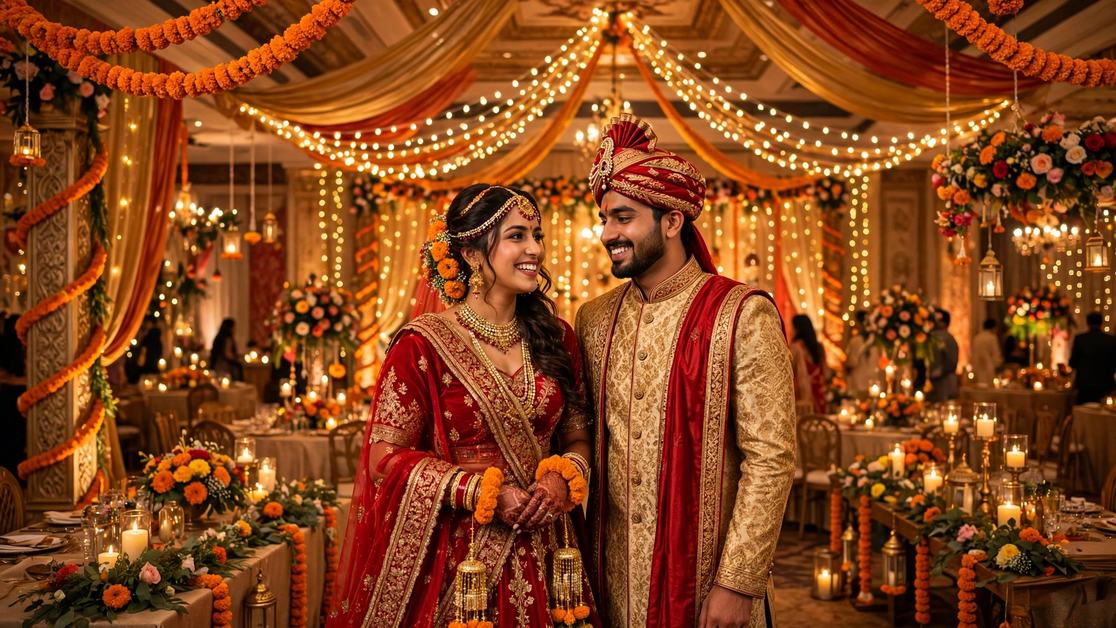
If you are planning a shaadi this year, the first question almost every Indian family asks is simple: how much does a wedding cost in India in 2026? The honest answer is that there is no single number — a careful home-district wedding can be done beautifully for ₹5 lakh, while a premium hotel celebration in a metro can cross ₹50 lakh without anyone trying very hard. What matters is not chasing an "average", but understanding where the money actually goes, line by line, so you can spend on what your family values and save on what nobody will remember. This complete wedding budget breakdown for India in 2026 gives you realistic ranges by tier, a worked ₹10 lakh sample budget, a Pune and Tier-2 snapshot, hidden costs most couples miss, and a copy-paste checklist you can start using today.
Wedding Cost in India 2026: The Quick Answer by Budget Tier
Most Indian weddings in 2026 fall into one of four broad tiers. Use this table as your starting map, then read the detailed breakdown below to adjust it for your city, guest count, and number of functions.
| Budget Tier | Total Budget | Typical Guest Count | What It Usually Looks Like |
|---|---|---|---|
| Budget | ₹3–8 lakh | 100–250 guests | Community hall or lawn, traditional catering, simple decor, one or two functions combined smartly |
| Mid-Range | ₹8–25 lakh | 250–500 guests | Banquet hall or mid-range hotel, fuller decor, separate haldi, mehndi, sangeet and reception |
| Premium | ₹25–75 lakh | 400–800 guests | Premium hotel or resort, designer outfits, cinematic films, live counters and curated themes |
| Luxury | ₹75 lakh and above | 500+ guests | Five-star or destination venue, celebrity entertainment, couture attire, multi-day guest hospitality |
In practice, many middle-class families land between ₹10 lakh and ₹20 lakh for a multi-function wedding, while a thrifty, well-planned celebration can stay within ₹5–10 lakh. Prices have also risen noticeably in the last three years — many vendors and venues now quote roughly 15–25% higher than they did in 2023 — so budgets copied from an older cousin's wedding will almost always fall short.
The One Number That Decides Almost Everything: Guest Count
Before venue shopping, before outfit shopping, lock your guest count. It is the single biggest driver of wedding cost in India, because so many expenses are charged per person or scale with headcount: catering per plate, chairs and tables, return gifts, rooms, transport, and even invitation printing. Venue and catering together usually consume 40–65% of the total budget.
Here is the maths that surprises most families: at a mid-range per-plate rate of ₹1,200–₹2,500, trimming just 100 guests can save roughly ₹2.5–4 lakh once you add seating, gifts, and service charges. That saving alone can pay for better photography, a designer blouse, or your entire entertainment line — without touching the quality of the celebration for the guests who are there. A smaller, warmer wedding is not a compromise; for many couples in 2026, it is the smartest budget decision available.
1. Venue Cost: Hall, Lawn, Banquet or Hotel?
Your venue sets the tone and takes the largest single cheque. Indicative 2026 ranges:
- Budget venues (community halls, small lawns, temple halls): ₹1–3 lakh total for the main functions.
- Mid-range banquets and hotels: ₹3–10 lakh, often with minimum-guest guarantees.
- Premium hotels, resorts and palaces: ₹10–50 lakh and above, especially for weekend dates in peak season.
Always ask what the quote actually includes. Some venues bundle decor, rooms, power backup, and catering; others charge for every chair, light, and generator hour separately. In Pune and other Tier-2 cities, good banquet options commonly sit in the mid-range band — noticeably cheaper than comparable Mumbai or Delhi properties — which is why many metro couples now host in Tier-2 cities where their families live, rather than paying metro premiums for the same experience.
2. Catering Cost Per Plate in India (2026)
Food is where Indian weddings earn their reputation — and where budgets quietly expand. Per-plate rates in 2026 typically look like this:
| Catering Level | Cost Per Plate | What Guests Get |
|---|---|---|
| Budget / traditional | ₹500–₹1,000 | Classic regional menu, limited live counters, hearty and familiar |
| Mid-range | ₹1,200–₹2,500 | Wider spread, chaat and live counters, desserts and mocktails |
| Premium hotel | ₹3,000–₹8,000+ | Multi-cuisine buffets, premium ingredients, full hotel service |
Worked example: 300 guests at a mid-range ₹1,800 per plate equals ₹5,40,000 for one main function. Now remember that haldi, mehndi, sangeet, the wedding, and the reception can each re-trigger catering, decor, and outfit costs — multi-function multiplication is the hidden reason budgets double. At hotels, also ask about GST and service charges, which can add 15–25% on top of the quoted rate. Get the all-inclusive figure in writing before you sign anything.
3. Decor, Flowers and Lighting
Decor for a single main function can range from ₹50,000 for simple, elegant florals and draping to ₹5 lakh or more for themed premium setups with fresh exotic flowers, stage design, and elaborate lighting. Fresh flowers, last-minute additions, and separate decor for every function are the usual overspend traps. A practical 2026 trick: invest in one stunning focal area — the stage and photo corner where 90% of pictures happen — and keep guest-area decor simple. Your photos will look premium, and your budget will thank you.
4. Photography and Videography
Photos and films are the only part of the wedding you keep forever, which is why this is the wrong line to cut to zero.
- Budget teams: ₹50,000–₹1 lakh for photo and video coverage of main functions.
- Mid-range teams: ₹1–2.5 lakh with candid photography, teaser films, and albums.
- Premium studios: ₹1–5 lakh, including cinematic films, drones, and same-day edits.
Book early for peak dates, confirm how many functions and hours are included, and ask when delivery happens — a beautiful film delivered after a year loses half its joy.
5. Bridal and Groom Attire — and the Jewellery Question
Indicative attire ranges for 2026: the bride's outfits together often come to ₹50,000–₹2 lakh or more across functions, while the groom's outfits typically run ₹20,000–₹1 lakh. Jewellery is different: many families spend ₹2–10 lakh or more, and it often accounts for 15–25% of everything spent around a wedding. Our honest advice is to treat jewellery as a separate family investment — gold and heirloom pieces hold value long after the wedding day — and keep it out of the event budget itself. Mixing the two makes a well-managed wedding look falsely expensive and creates unnecessary stress.
To save without looking it: shop off-season sales, consider renting heavy lehengas worn for only a few hours, and repeat smart staples across functions with different styling.
6. Entertainment, Music and the Small Functions
A good DJ typically costs ₹20,000–₹1 lakh depending on city, hours, and equipment. Live singers, dhol players, anchors, and choreographers each add their own line — a family sangeet with a choreographer for a month of practice sessions is wonderful, but price it before you promise it to twelve cousins. Mehndi artists, haldi decor, makeup artists (often ₹15,000–₹75,000+ for bridal packages), and pandit or registrar fees are smaller lines that together can still add ₹1–3 lakh across functions. List them all; surprises are what break budgets, not the big items you planned for.
7. Wedding Invitations: Paper vs Digital — The Maths Nobody Shows You
Invitations are the first impression of your wedding, and one of the clearest places where 2026 couples save serious money. Printed cards commonly cost ₹50–₹500 per invite for regular designs — and designer or boxed invitations can cost far more per card. For 300 guests, paper alone can run ₹15,000 to ₹1,50,000, before courier charges, fuel for hand-delivery rounds, and reprints when a date or venue detail changes.
Compare that with a digital wedding invitation. On Jobitra's pricing page, plans start at just ₹99 and the popular tiers are ₹299 and ₹599 — a flat cost for your whole guest list, not per card. You can share on WhatsApp with unlimited guest sharing, collect RSVPs, add a Google Maps venue link, a countdown, photos, and background music, and update any detail instantly without reprinting a single card. Many families now choose a hybrid approach: print a small set of 11–21 cards for the temple and senior elders who cherish a physical card, and send a beautiful digital invitation to everyone else. You keep the tradition, respect the elders, and save most of the paper budget.
Browse designs on Jobitra and build your invitation in the Jobitra app once your dates are fixed — it takes minutes, and your guests can RSVP from the same link.
Pune and Tier-2 Cities: A More Ground-Floor View
National guides love Delhi and Mumbai numbers, but most Indian weddings happen in Tier-2 cities and hometowns — and the economics are friendlier there. In Pune, Nagpur, Indore, Lucknow, Kochi, and similar cities, a well-run mid-range wedding for 250–400 guests commonly fits within ₹8–18 lakh: banquet venues in the ₹3–8 lakh zone across functions, catering closer to ₹1,000–₹2,000 per plate, and strong local photographers and decorators at rates well below metro premiums. The savings rarely mean lower quality — they reflect lower real-estate and labour costs. If your family roots are in a Tier-2 city, hosting there is often the single biggest legitimate saving available to you.
Sample Budget: How to Split ₹10 Lakh for an Indian Wedding
Here is a realistic worked split of a ₹10 lakh wedding budget — the most common target families ask about. Adjust the percentages, not the discipline:
| Category | Share | Amount (₹10 Lakh Budget) |
|---|---|---|
| Venue | 20% | ₹2,00,000 |
| Catering (main + small functions) | 32% | ₹3,20,000 |
| Decor & flowers | 8% | ₹80,000 |
| Photography & video | 10% | ₹1,00,000 |
| Attire (bride + groom, all functions) | 10% | ₹1,00,000 |
| Makeup & mehndi | 4% | ₹40,000 |
| Entertainment (DJ, dhol, anchor) | 3% | ₹30,000 |
| Invitations (hybrid: few printed + digital) | 1% | ₹10,000 |
| Gifts, rituals & miscellaneous | 5% | ₹50,000 |
| Contingency buffer | 7% | ₹70,000 |
| Total | 100% | ₹10,00,000 |
Scaling rule: for a ₹5 lakh budget, protect catering quality and photography, merge functions, and cut decor and attire first. For a ₹25 lakh budget, upgrade the venue and guest experience before upgrading outfits — guests remember food, comfort, and music far longer than they remember a second lehenga change.
Hidden Wedding Costs Most Couples Miss
- Taxes and service charges: hotel GST and service can add 15–25% over quoted rates.
- Vendor meals and rooms: photographers, makeup artists, and outstation guests all need food and stay.
- Power and permissions: generator fuel, sound permissions, and venue overtime charges.
- Transport: guest pickups, baraat vehicles, and airport runs for NRI relatives.
- Reprints and changes: one changed venue line can invalidate 300 printed cards — digital invites make this cost zero.
- Tips and small cash: keep an envelope of small notes ready; dozens of small payments appear on the day.
That is why every budget in this guide includes a 5–10% contingency buffer. If you do not use it, it becomes a wonderful start to your honeymoon fund.
12 Practical Ways to Reduce Your Wedding Cost in 2026
- Choose a weekday or off-peak date — venues may offer 20–40% lower rates than peak-season weekends.
- Prefer a lunch reception over dinner where customs allow; daytime events often cost less to host.
- Trim the guest list honestly — 100 fewer guests can save ₹2.5–4 lakh at mid-range rates.
- Merge functions: haldi and mehndi on one morning, sangeet and cocktail-style evening together.
- Go hybrid on invitations: 11–21 printed cards for elders, digital for everyone else.
- Book photography, makeup, and venues 8–12 months early for better rates and choice.
- Rent or buy off-season for heavy outfits worn for a few hours.
- Invest decor money in the stage and photo corner; keep the rest simple.
- Use seasonal, local flowers instead of imported exotics.
- Serve a shorter, excellent menu rather than a long, average one — guests notice quality, not count.
- Collect RSVPs digitally so catering numbers are accurate — every confirmed plate you do not order is pure saving.
- Track every advance payment in one shared sheet both families can see.
Copy-Paste Wedding Budget Checklist
Copy this checklist into your notes app and tick items off as you book:
- ☐ Guest count locked (separate lists per function)
- ☐ Venue booked — all-inclusive written quote (taxes, power, rooms, overtime)
- ☐ Catering booked — per-plate rate, minimum plates, GST confirmed
- ☐ Decor — stage, entrance, photo corner, per-function scope in writing
- ☐ Photography & video — functions, hours, delivery date agreed
- ☐ Attire — bride, groom, and immediate family, with alteration buffer
- ☐ Makeup, hair & mehndi trials done
- ☐ Entertainment — DJ/dhol/anchor, choreographer if needed
- ☐ Invitations — printed set for elders + digital invite with RSVP live
- ☐ Transport & guest stay plan
- ☐ Rituals — pandit/registrar, puja items, gifts
- ☐ Contingency buffer (5–10%) kept untouched
FAQs: Wedding Cost in India 2026
What is a reasonable wedding budget in India in 2026?
For most families, ₹8–20 lakh covers a comfortable multi-function wedding with 250–500 guests in a Tier-2 city or a modest metro celebration. A careful budget wedding can be done in ₹3–8 lakh, while premium hotel weddings start around ₹25 lakh and luxury celebrations go well beyond ₹75 lakh.
How much does catering cost per plate at an Indian wedding?
In 2026, budget catering is roughly ₹500–₹1,000 per plate, mid-range is ₹1,200–₹2,500, and premium hotel catering is ₹3,000–₹8,000 or more per plate. Remember that hotel taxes and service charges can add 15–25%, so always compare all-inclusive quotes.
What is the biggest expense in an Indian wedding?
Venue and catering together, usually 40–65% of the total budget. Both scale with guest count, which is why finalising your guest list early is the most powerful budget decision you will make.
How can we split a ₹10 lakh wedding budget?
A proven split is about 32% catering, 20% venue, 10% photography, 10% attire, 8% decor, and smaller shares for makeup, entertainment, and invitations, with about 7% kept as a contingency buffer. The full ₹10 lakh table in this guide can be copied directly into your planning sheet.
Are digital wedding invitations really cheaper than printed cards?
Yes, by a wide margin. Printed cards for 300 guests can cost ₹15,000–₹1,50,000 before delivery, while digital invitation plans on Jobitra start at ₹99 as a flat cost for your entire guest list, with RSVP tracking, maps, and instant updates included. A hybrid approach — a few printed cards for elders, digital for everyone else — keeps tradition and savings together.
How much buffer should we keep for unexpected wedding expenses?
Keep 5–10% of your total budget untouched as contingency. Taxes, overtime, extra plates, transport, and last-minute additions are normal at Indian weddings; a buffer turns them from a crisis into a minor adjustment.
Final Word: Spend on Memories, Save on Everything Else
So, how much does a wedding cost in India in 2026? Anywhere from ₹3 lakh to well over ₹75 lakh — but the couples who enjoy their weddings most are rarely the ones who spent the most. They are the ones who decided early what mattered — great food, the people they love, photos they will treasure — and let everything else be simple. Lock your guest count, get all-inclusive quotes in writing, protect a contingency buffer, and use smart modern tools where they genuinely save money.
Start with the easiest saving on the list: create your digital wedding invitation on Jobitra, check the transparent plans on the pricing page, and share a beautiful invite with RSVP tracking to your entire guest list today — for less than the cost of printing a handful of paper cards. Your budget, your guests, and your future selves will all say thank you.