Eco-Friendly Weddings: 12 Ideas to Go Green Without Losing Style
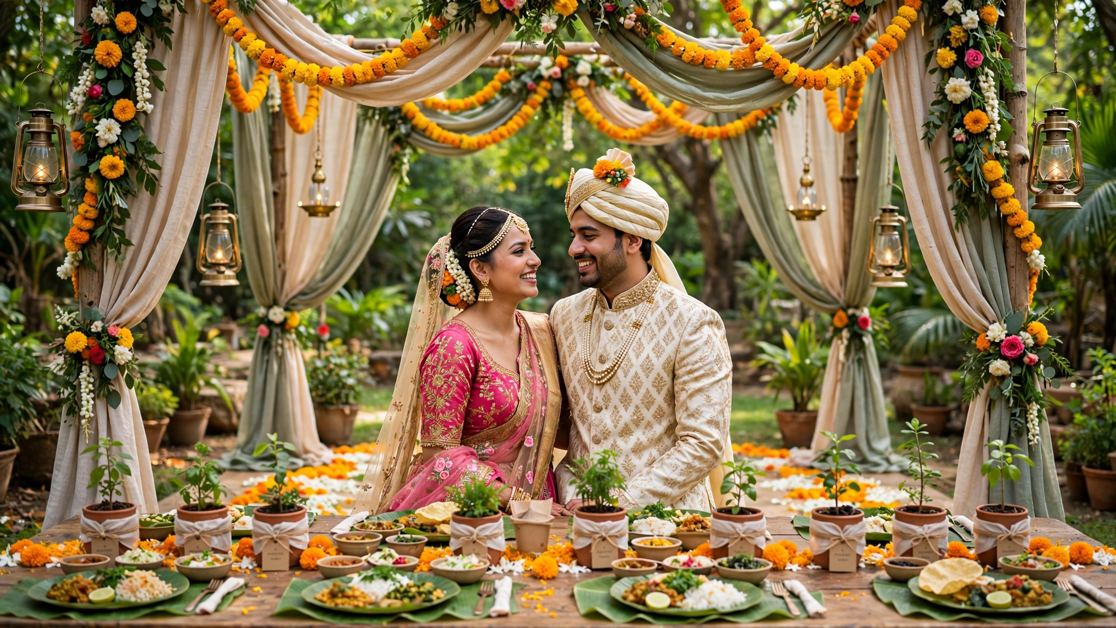
Planning an eco-friendly wedding in India does not mean a smaller celebration, plainer decor or apologising to your guests. The greenest Indian weddings of 2026 are also some of the most beautiful — because the same choices that cut waste usually cut cost and stress too: digital invitations instead of a thousand printed cards, a headcount you can trust instead of food ordered on fear, local flowers in season instead of imported stems flown in at triple price. This guide gives you 12 practical eco-friendly wedding ideas grouped as a real plan — paper, venue and decor, food, and outfits and gifts — in priority order, with honest costs, the mistakes that make green weddings fail, and answers to the questions families actually ask. Start with just the first three ideas and you will capture most of the benefit.
The Quick Answer: The 3 Highest-Impact Swaps
- Digital invitations for most guests — print only 11–21 paper cards for the temple and elders.
- An accurate RSVP headcount before you confirm catering — food is the biggest waste stream at any wedding.
- No single-use plastic — steel or reusable serving, water dispensers instead of bottled water.
Everything else in this list is refinement. These three are transformation.
Group A — Paper and Invitations
1. Go Digital for Most Guests, Print a Small Sacred Run
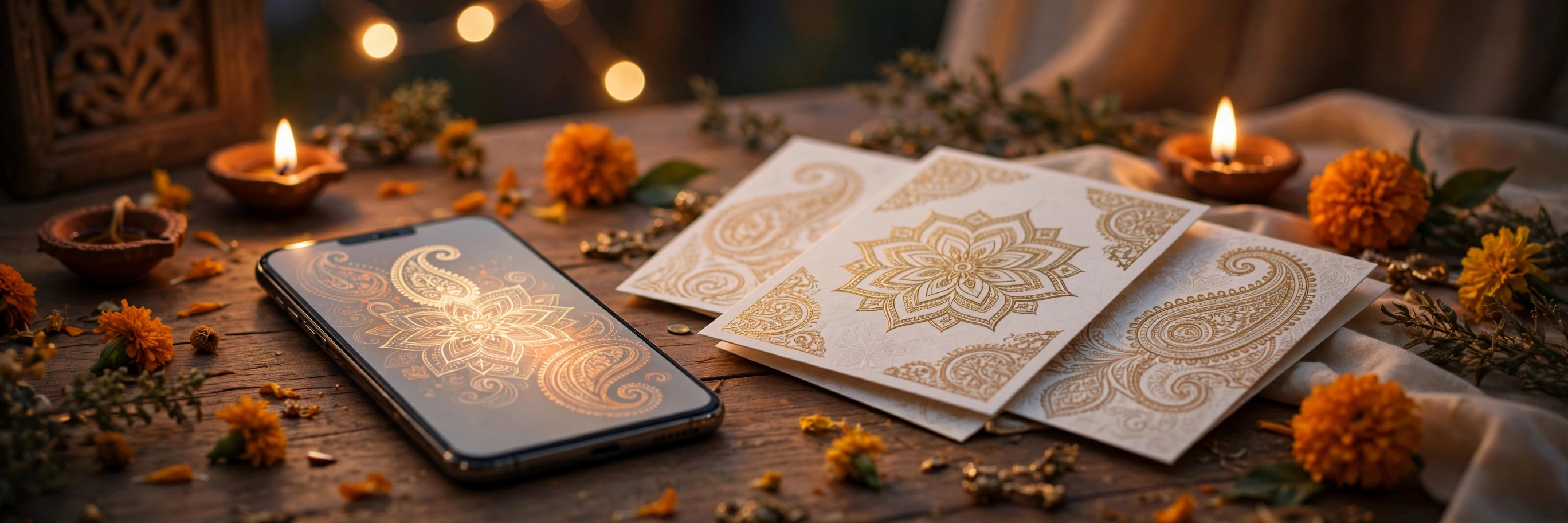
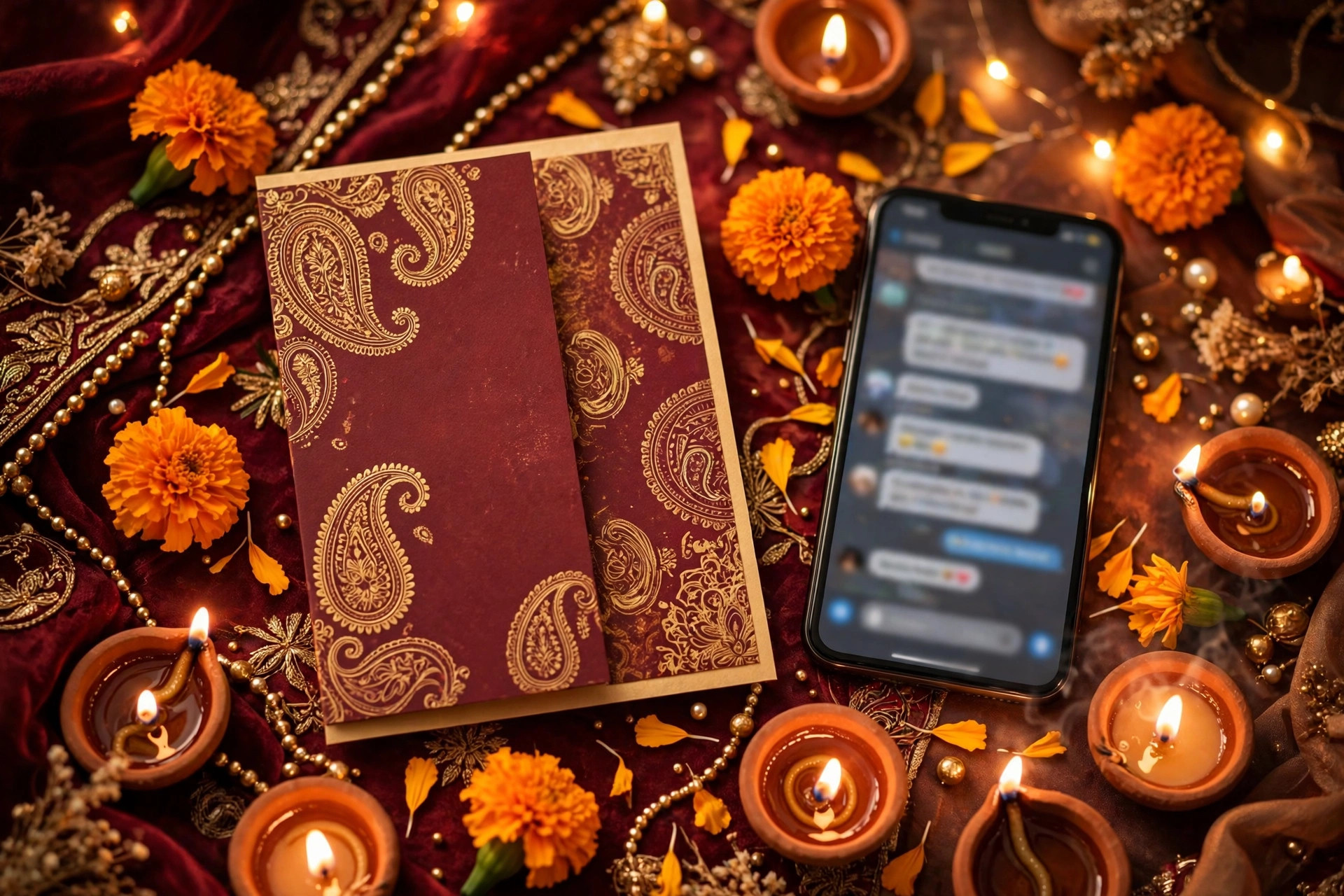
Invitations are the easiest waste to delete because the alternative is better, not just greener. Printed cards in India cost roughly ₹20–₹50 per card for basic designs and ₹200 or more for designer cards — before courier charges and delivery trips. A digital invitation on Jobitra costs ₹99 to ₹599 flat for your entire guest list (verified October 2026), with maps, music, countdown and RSVP built in, and it can be edited after sending. The honest hybrid most families now choose: print 11–21 beautiful cards for the temple offering and senior elders you visit in person, and send digital to everyone else. Tradition is honoured, paper use falls by over 95%, and you keep the money for food your guests will actually praise. Browse invitation templates on Jobitra to start yours.
2. If You Print, Print Seed Paper or Recycled Paper
For that small printed run, make every card count. Plantable seed-paper cards — listed from around ₹35 per card by Indian suppliers — carry tulsi or wildflower seeds in the paper itself: guests soak the card, plant it, and your invitation quite literally grows. Recycled and handmade papers are the other strong option. Yes, seed paper costs more per card than basic printing — which is exactly why it belongs on the 11–21 card run, not a 500-card order.
Group B — Venue and Decor
3. Choose a Daytime or Naturally Beautiful Venue
A lawn, courtyard or hall with its own character needs a fraction of the decor of a blank box — and daytime functions use natural light instead of banks of artificial lighting. Where your family's schedule allows a morning wedding or daytime reception, you save on power, decor and budget simultaneously, and your photographs get the best light of the day for free.
4. Local, Seasonal Flowers — and a Second Life for Them
Marigold, mogra, roses and tuberose in season are fresher, cheaper and travel a tiny distance compared to imported exotics. Ban plastic and thermocol from the decor entirely; they are the elements that go straight to landfill. Before the wedding, arrange what happens to the flowers after: organisations in many cities collect used wedding flowers and turn them into incense, natural colours and compost. Decide this in advance — flowers donated the same night become a product; flowers discussed the next morning become garbage.
5. Rent, Reuse and Borrow the Decor
Cloth drapes, brass lamps, glass bottles, wooden crates, jute and cane — the most photographed rustic premium decor of 2026 is almost entirely reusable. Rent structures and props instead of buying single-evening items, reuse the same elements across Haldi, Mehndi and the wedding with different flowers, and borrow family pieces with history. A grandmother's brass urli on the stage is greener and more meaningful than anything a prop shop sells.
Group C — Food and Waste (Where the Real Impact Lives)
6. Lock Your Headcount With RSVP Before Confirming Catering
More wedding food is wasted through hopeful over-ordering than through anything guests do. Add 100 extra plates, just in case, is fear, not planning. Collect RSVPs per function — Haldi numbers are never Reception numbers — confirm your caterer on real counts with a small, sane buffer, and update once a week before. This is where a digital invitation quietly does environmental work: its RSVP dashboard turns guesswork into numbers. Pair it with our Indian wedding cost breakdown to see what accurate counts save in rupees too.
7. Pre-Agree Leftover Donation With Your Caterer
Surplus cooked food can feed people the same night — but only if the pickup is arranged before the event. Agree with your caterer in writing: surplus will be packed hygienically at the end of service, and a local food-rescue or charitable organisation will collect it that night. Trying to arrange this at midnight after the reception is how good food ends up wasted despite everyone's intentions.
8. Steel, Banana Leaf and Dispensers — No Single-Use Plastic
Serve on steel or reusable ware; where that is genuinely impossible, banana leaf and certified compostable options beat plastic-coated disposables. Replace bottled water with dispensers and refill stations with steel glasses — a repeated practice at real eco-weddings across India, and one guests adapt to in minutes. Segregate waste at the venue into wet, dry and compost so the venue's cleanup does not undo your choices.
9. Build the Menu From Local and Seasonal Food
Regional, in-season dishes travel less, taste fresher and usually cost less than imported or out-of-season showpieces. Frame this to family as a taste decision first — because it is one. A shorter menu of excellent local food beats a long menu of flown-in mediocrity on every measure: flavour, cost and footprint.
Group D — Outfits, Gifts and Favours
10. Wear Clothes That Will Be Worn Again
Choose at least some outfits you will genuinely rewear, restyle a family heirloom for one function — a mother's or grandmother's saree, restyled with a modern blouse, photographs with a depth no new purchase matches — and consider renting the heaviest, most single-use pieces. Looking stunning and buying disposable fashion are not the same thing.
11. Print a Polite No-Plastic, No-Bouquet Request on the Invitation
Guests comply with what is printed, not what is whispered. One warm line on your invitation or wedding page asking guests to avoid plastic wrapping, plus a suggested alternative like fabric or newspaper wrapping, prevents a mountain of cellophane without offending anyone. Put it where guests see it before they shop, not at the venue door.
12. Give Favours Guests Will Keep
Potted saplings and seed packets travel well even for outstation guests, spices and handmade soap get used, and all of them beat plastic-wrapped return gifts that are opened once and discarded. A favour that lives — a tulsi plant on a guest's balcony — is also the only return gift that keeps reminding people of your wedding for years.
Green on a Budget: The Ideas That Actually Save Money
Notice the pattern: ideas 1, 6, 8 and 11 do not cost extra — they save. Digital invitations replace a ₹10,000–₹1,00,000 paper line with a ₹99–₹599 flat plan. An accurate headcount cuts paid-for plates nobody eats. Dispensers beat hundreds of bottled-water units. A printed no-bouquet line costs nothing. The one genuine premium in this guide is seed paper, and only for a handful of cards. An eco-friendly wedding is not a luxury category; planned properly, it is a discount with better values.
Copy-Paste Eco-Wedding Checklist
- ☐ Digital invitation live; 11–21 printed cards only (seed/recycled paper)
- ☐ No-plastic / no-bouquet line printed on the invitation
- ☐ Venue chosen for natural beauty/light; plastic & thermocol banned in decor
- ☐ Local seasonal flowers ordered; flower donation/compost arranged in advance
- ☐ Decor rented/reused/borrowed; elements reused across functions
- ☐ RSVP per function collected; catering confirmed on real headcount
- ☐ Leftover-food pickup agreed with caterer before the event
- ☐ Steel/reusable serving; water dispensers, no bottled water
- ☐ Local seasonal menu; waste segregation planned at venue
- ☐ Heirloom/restyled outfit for at least one function
- ☐ Living favours ready: saplings, seeds, spices or handmade soap
5 Mistakes That Make Eco Weddings Fail
- All-or-nothing thinking: a fully zero-waste wedding is hard, so couples abandon the idea entirely — when 3–4 swaps capture most of the benefit.
- Fake-eco decor: biodegradable-look plastic, glitter and non-compostable embellishments that are single-use wearing a green costume.
- Booking the leftover pickup after the event: donation logistics arranged late are donation logistics that never happen.
- Printing a full paper run AND sending digital to everyone: the worst of both — pick the hybrid split deliberately.
- Asking for no plastic gifts without printing it anywhere: guests cannot follow a request they never saw.
FAQs: Eco-Friendly Weddings in India
Does an eco-friendly wedding cost more?
Usually the opposite. Digital invitations, accurate catering counts, water dispensers and rented decor all save money. Seed paper for a small printed run is the main premium item — and it replaces dozens of ordinary cards, not thousands.
Will elders accept digital invitations at a green wedding?
Yes, with the hybrid approach: a hand-delivered printed card for elders and the temple, digital for everyone else, and a personal call or visit regardless of format. Respect is in the visit, not the print run.
What single change makes the biggest difference?
For waste overall, the accurate RSVP headcount — because food is the biggest waste stream at an Indian wedding and over-ordering is its main cause. For paper specifically, digital invitations eliminate nearly all of it in one step.
Can a big, grand Indian wedding still be eco-friendly?
Yes. Scale changes the quantities, not the method. A 1,000-guest wedding using digital invitations, RSVP-based catering, steel serving and flower donation is far greener than a 200-guest wedding doing none of those things.
What should we do with the flowers after the wedding?
Arrange it before the day: donation to organisations that convert used flowers into incense and natural colours, or composting through your venue/decorator. Same-night collection is the key detail.
How do we tell guests about our green choices without sounding preachy?
One warm line on the invitation, framed as joy rather than rules: you are celebrating in a way that leaves blessings, not waste. Guests respond to pride far better than to instruction.
Final Word: Greener, Cheaper, More Beautiful — Pick All Three
An eco-friendly wedding in India is not a theme; it is simply good planning with its eyes open. Digital invitations, honest headcounts, local flowers, food that feeds people instead of bins, and favours that live — every idea in this guide makes the wedding look better, cost less or run smoother at the same time as it lightens your footprint.
Start with idea number one today: create your digital wedding invitation on Jobitra, check the flat plans on the pricing page, and build it in the Jobitra app — 11–21 printed cards for tradition, one beautiful link for everyone else, and a wedding your grandchildren's planet will thank you for.