Wedding Planning Timeline for a 3-Month Engagement: Week-by-Week Crash Plan (2026 Guide)
Wedding Planning Timeline for a 3-Month Engagement: Week-by-Week Crash Plan (2026 Guide)
Three months. Ninety days. That is all you have between the ring and the pheras — and if your family just announced the engagement, you are probably wondering how anyone plans an Indian wedding in 12 weeks without losing their mind. The good news: it is absolutely doable. The better news: a short engagement can actually be a blessing, because it forces decisions instead of endless deliberation.
This week-by-week wedding planning timeline for a 3-month engagement is built for Indian weddings — Haldi, Sangeet, wedding, reception, and all the family logistics in between. It tells you what to lock in each week, what can wait, and what to stop worrying about. Follow it in order, and by week 12 you will be walking down the aisle instead of chasing vendors.
First, the Ground Rules for a 90-Day Wedding
Before week 1 begins, agree on five things as a couple and as families. These decisions protect you from the single biggest risk of a short engagement: decision paralysis.
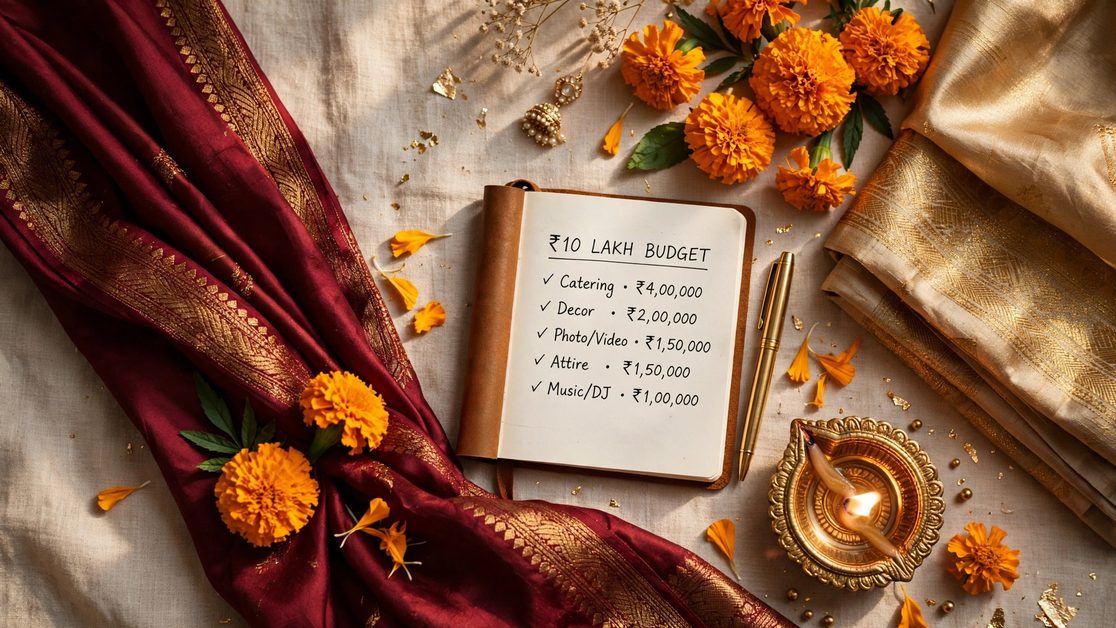
- Budget first, everything second. Fix a total number and a per-function split before you visit a single venue. A 3-month wedding punishes impulse bookings.
- Guest count before venue. A hall for 300 cannot become a hall for 600 in week 8. Finalise the list early and freeze additions by week 6.
- One decision-maker per area. Venue = one person. Catering = one person. Outfits = the couple. Committees of twelve relatives will eat your calendar alive.
- Book vendors who have done short timelines before. Ask directly: "Have you delivered a wedding booked 8 weeks out?" If they hesitate, move on.
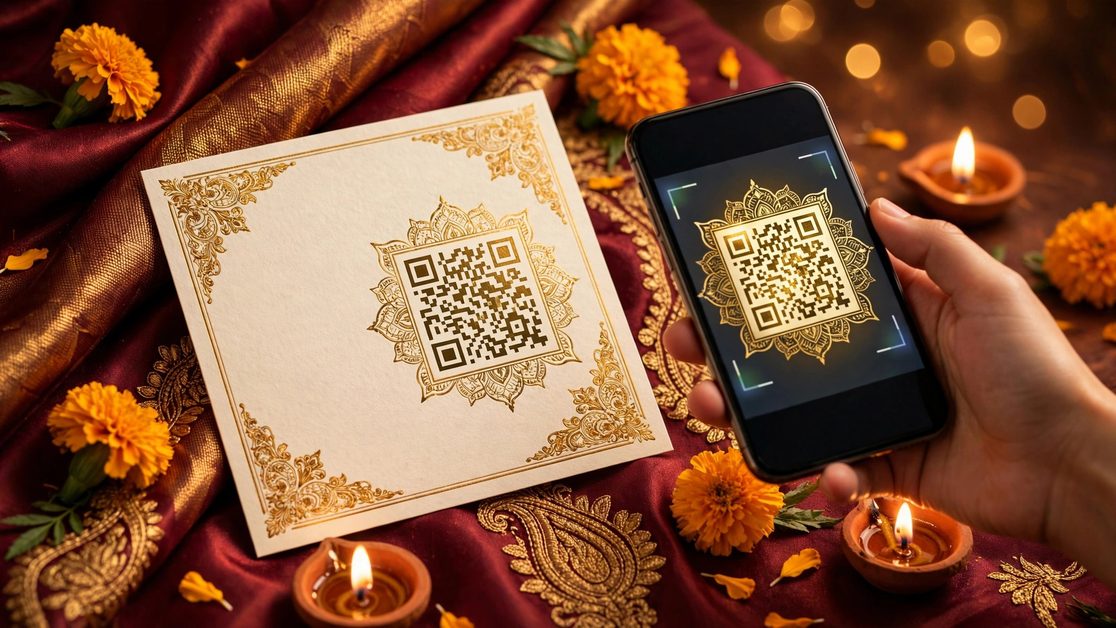
- Digital invitations from day one. Printed cards need 2–3 weeks for design, printing, and delivery. A digital wedding invitation website can be live in a day, updated any time, and shared on WhatsApp instantly — which is exactly what a 90-day timeline demands.
Month 1 (Weeks 1–4): Lock the Big Five
Week 1: Budget, Date, and Venue Hunt
Days 1–3 are for the unglamorous work: total budget, guest list draft, and the wedding date. Check auspicious dates with your family priest, but keep two or three options open — venue availability in 90 days is tight, and flexibility on the exact date is your biggest negotiating weapon.
By day 4, start venue visits. In a 3-month timeline, you cannot afford ten venue tours. Shortlist three venues that fit your guest count and budget, visit them in two days, and book by the end of week 1. Ask every venue four questions: Is the date actually free? What is included (chairs, lights, sound, generator)? What is the cancellation policy? Can outside catering and decorators come in?
Also in week 1: book the priest or officiant, and block the photographer and videographer. The best photographers are booked months ahead, so in a short engagement you may need to accept your second or third choice — and that is fine. A good photographer with availability beats a famous one who cannot come.
Week 2: Catering, Decor, and Outfits
Week 2 is tasting week. Finalise the caterer and lock the menu — vegetarian, Jain, and non-vegetarian counts per function. Indian weddings live or die on food, and caterers need a headcount early to plan staff and supplies.
Meet two decorators, not five. Show them your venue photos and a simple brief: colour palette, stage style, and the functions you need decorated. Book one by the end of the week. Simultaneously, start outfit shopping. Bridal lehengas and sherwanis often need 4–6 weeks for fitting and alterations, so week 2 is already late — prioritise ready-to-wear or boutiques that guarantee delivery in 6 weeks, and book your first fitting immediately.
Week 3: Invitations, Music, and Guest Logistics
Week 3 is when your wedding becomes real to your guests. Create your digital wedding invitation now: pick a design, add the couple's story, function schedule, venue maps, and RSVP. Because a digital invitation can be edited after sending, you can share it in week 3 even while small details (like the Sangeet start time) are still being finalised. Share it on WhatsApp and family groups the same week — in a 90-day wedding, guests need maximum notice for travel and leave.
This week also: book the DJ or live musicians for Sangeet, the mehndi artist for the bride and family, and the makeup artist (trial this week, not in week 11). If guests are travelling, block hotel rooms now — a small room block at one or two nearby hotels saves dozens of individual phone calls later.
Week 4: The First Checkpoint
End of month 1, you should have: venue, priest, photographer, caterer, decorator, outfits ordered, invitations sent, and hotel blocks. If any of the Big Five is still open, escalate it this week — every week of delay from here costs you vendor choice and negotiating power.
Use week 4 to build your master tracker: one spreadsheet with vendor, contact, advance paid, balance due, and delivery date. Share it with both families. In a short engagement, the tracker is your memory — nobody can hold 40 vendor details in their head.
Month 2 (Weeks 5–8): Details, Fittings, and Functions
Week 5: Function-by-Function Planning
Now plan each function separately: Haldi, Mehndi, Sangeet, wedding, reception. For each, fix the venue or home setup, start time, dress code, and who is responsible. Sangeet needs a choreographer if family performances are planned — book rehearsals now, because cousins scattered across cities need a practice schedule.
Order wedding favours and return gifts this week. Anything customised or shipped takes 2–3 weeks, and week 5 is your last comfortable ordering window.
Week 6: Freeze the Guest List and Chase RSVPs
Week 6 is the freeze date. No new guests after this week except genuine emergencies. Send your first RSVP reminder on WhatsApp — a short, polite message with the invitation link and a reply deadline of week 8. Track responses function by function, not just a single yes/no: a guest may attend the wedding but skip the Sangeet, and your caterer needs per-function headcounts.
Finalise transport: guest pickups from the airport or station, cars for the baraat, and parking at the venue. Book rental cars now; wedding-season fleets go fast.
Week 7: Fittings, Trials, and Content
First outfit fitting this week. Bridal makeup trial should already be done — if it is not, do it now, not later. Confirm the mehndi design and book the artist's arrival time. Confirm the photographer shot list: family portraits, couple shots, and the three moments you absolutely want captured.
This is also the week to plan wedding content: a hashtag, a photo-sharing plan for guests, and any video invitation or teaser you want to post. Keep it simple — one hashtag, one shared album link, and one person in charge of collecting guest photos.
Week 8: Second Checkpoint and Final Counts
End of month 2, everything structural should be booked. Give caterers and venues your near-final headcount (with a 5–10% buffer — Indian weddings always grow). Pay all vendor advances that are due, and confirm every booking in writing on WhatsApp or email. Verbal confirmations are worth nothing when a vendor double-books.
Send the second RSVP reminder this week, with a firm deadline: "Please confirm by [date] so we can finalise seating and catering."
Month 3 (Weeks 9–12): Execution Mode
Week 9: Seating, Schedule, and the Run Sheet
Build the wedding-day run sheet: a single page with every function's start time, venue address, vendor arrival times, and key contacts. Print copies for both families and the wedding coordinator (if you have one — in a 90-day wedding, a day-of coordinator is worth every rupee).
Plan seating for the wedding and reception. Keep it simple: family tables, friends tables, elders near the front. Do not micro-manage individual seats — a table plan is enough.
Week 10: Final Fittings and Vendor Confirmations
Final outfit fitting this week. Collect all outfits, jewellery, and accessories in one place. Call every vendor and reconfirm: date, time, venue, and balance payment. Confirm the baraat route and timing with police or society permissions if needed. Confirm hotel check-ins for outstation guests.
Prepare the welcome kits or guest information cards if you are giving them: schedule, venue maps, and emergency contact numbers. A digital invitation with all this information linked saves printing entirely.
Week 11: The Calm-Before Week
Week 11 is for everything small: mehndi, haldi supplies, gifts for family members, the wedding favours packed and labelled, and the "emergency kit" — safety pins, extra buttons, medicine, chargers, and a copy of every vendor's number. Get a haircut and grooming done now, not in week 12. Rest. Seriously — the most common regret of short-engagement couples is arriving at their own wedding exhausted.
Send the final guest message this week: function schedule, venue links, dress codes, and a warm thank-you. One message, all details, no follow-up needed.
Week 12: Wedding Week
Mehndi, Haldi, Sangeet, wedding, reception — enjoy them. Your job this week is not logistics; it is being present. Hand the run sheet to your coordinator or a trusted sibling, keep your phone charged, and let the plan carry you. If something small goes wrong — and something always does — nobody will remember it. They will remember how you looked and how happy you were.
3-Month Wedding Planning Checklist (Copy-Paste)
- Weeks 1–2: Budget, guest list, date, venue, priest, photographer, caterer, decorator, outfits ordered
- Weeks 3–4: Digital invitations sent, music/DJ, mehndi and makeup artists, hotel blocks, master tracker built
- Weeks 5–6: Function plans, favours ordered, guest list frozen, RSVP chase 1, transport booked
- Weeks 7–8: Fittings and trials, shot list, hashtag, near-final headcounts, advances paid, RSVP chase 2
- Weeks 9–10: Run sheet, seating plan, final fittings, all vendors reconfirmed, baraat route
- Weeks 11–12: Small supplies, emergency kit, final guest message, wedding week — enjoy it
What to Skip (and What Never to Skip) in a Short Engagement
Skip: elaborate pre-wedding shoots (one good couple session is enough), custom-printed everything, ten outfit changes, and a 40-person sangeet choreography. These consume the weeks you do not have.
Never skip: the venue contract in writing, the caterer's tasting, the makeup trial, the final vendor reconfirmation calls, and sending invitations early. Cutting these corners is how a short engagement turns stressful instead of simply fast.
Frequently Asked Questions
Is 3 months enough to plan an Indian wedding?
Yes — if you decide fast and book the big vendors in the first two weeks. The couples who struggle are not the ones with less time, but the ones who spend four weeks choosing between two identical venues. A 3-month engagement removes that luxury, which is a feature, not a bug.
What should I book first in a 3-month engagement?
In order: venue, photographer/videographer, caterer, decorator, and outfits. These five have the longest lead times and the least flexibility. Everything else — music, favours, content — can be arranged in weeks 3–8.
When should I send wedding invitations for a 3-month engagement?
By the end of week 3 at the latest, so guests have at least 9 weeks' notice for travel and leave. Digital invitations are ideal here: they go out instantly on WhatsApp, cost a fraction of printed cards, and can be updated if a function time changes.
How do I handle RSVPs with so little time?
Use a digital invitation with a built-in RSVP button and track responses per function. Send two reminders — week 6 and week 8 — with a firm final deadline. Call the non-responders personally in week 9; in Indian weddings, a phone call closes what three WhatsApp messages cannot.
Can I negotiate better prices with a short engagement?
Sometimes, yes. Vendors with an open date 8–10 weeks out would rather fill it at a fair price than leave it empty — especially for weekday weddings. Ask politely, bundle services, and pay advances on time; reliability is your negotiating currency.
Do I need a wedding planner for a 90-day wedding?
Not necessarily, but a day-of coordinator is strongly recommended. A full planner helps most in months 1–2; if your budget is tight, hire a coordinator for the wedding week only and run the checklist above yourselves.
Final Word
A 3-month engagement is not a compromise — it is a different kind of wedding, faster, sharper, and often more joyful because nobody has time to overthink it. Lock the big five in week 1, send your invitations in week 3, freeze the list in week 6, and hand the run sheet to someone you trust in week 12. The rest is celebration.
Ready to get your invitations out this week? Browse Jobitra's wedding invitation templates, create your digital invitation in minutes, and share it on WhatsApp today. You can also explore the Jobitra app and check plans starting from ₹199 — because in a 90-day wedding, every day you save on invitations is a day you get back for everything else.