
Most Popular Indian Wedding Rituals Explained Beautifully
Most Popular Indian Wedding Rituals Explained Beautifully
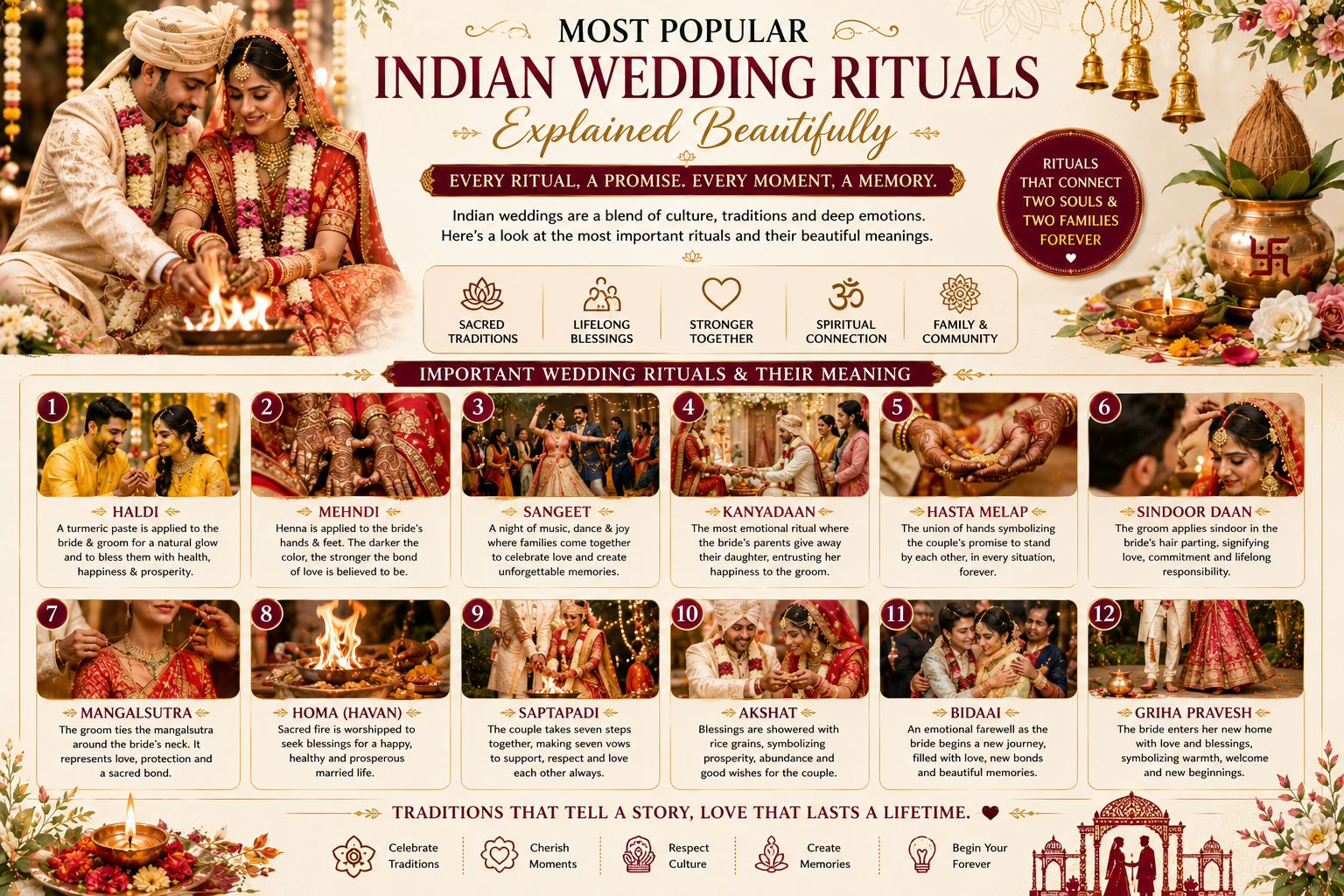
An Indian wedding is not one ceremony. It is twenty smaller ceremonies, each carrying its own meaning, its own emotional weight, and its own beautiful symbolism. For many Indian couples today — especially those raised in urban or NRI households — these rituals can sometimes feel mysterious, even when they participate in them. What does haldi actually symbolize? Why does the bride throw rice at the vidaai? What is the kanyadaan really saying?
Here is the complete, lovingly-written guide to the most popular Indian wedding rituals — what they are, what they mean, and why they have endured for centuries. Understanding the rituals does not just make your wedding more beautiful. It makes it sacred.
Why Indian Wedding Rituals Are So Meaningful
Indian weddings are not just about two people getting married. They are about two families uniting, ancestral blessings being invoked, and a deep spiritual contract being made before the divine. Every ritual is layered with metaphor — water for purification, fire for witnessing, rice for prosperity, sindoor for marital status. The rituals are not random. Each one tells a piece of the same eternal story.
Pre-Wedding Rituals
1. Roka Ceremony
The formal first step. Both families meet, exchange sweets and gifts, and agree to the alliance. The word "roka" literally means "to stop" — symbolizing that both families have stopped looking elsewhere.
2. Sagai (Engagement)
The exchange of rings between the bride and groom in the presence of family. This is when the formal commitment becomes visible. Modern sagais often include personalized vows and ring-exchange ceremonies that blend Indian tradition with Western style.
3. Tilak Ceremony
The bride's family visits the groom's home, applies tilak (a red mark) on his forehead, and offers gifts. Symbolizes acceptance and welcome of the groom into the bride's family.
4. Ganesh Puja
Before any major ritual, families pray to Lord Ganesha — the remover of obstacles. Performed at the beginning of every wedding function to ensure smooth ceremonies ahead.
5. Mehendi Ceremony
The bride's hands and feet are decorated with intricate henna designs. The deeper and darker the mehendi color, the more her husband and mother-in-law will love her, according to tradition. Modern brides often have professional mehendi artists create custom designs incorporating the couple's names.
6. Sangeet
The musical celebration. Both families perform dance routines, sing songs, and celebrate together. Originally a women-only ceremony where mothers and sisters welcomed the bride into the family through song. Today, sangeets are gender-neutral, lavishly choreographed productions.
7. Haldi Ceremony
Turmeric paste mixed with rose water, sandalwood, and milk is applied to the bride and groom by family members. Turmeric is believed to purify the skin, ward off evil eye, and bring radiance. It is also a practical pre-wedding skincare ritual passed down for centuries.
Wedding Day Rituals
8. Baraat (Groom's Procession)
The groom arrives at the wedding venue accompanied by his family and friends, often on a decorated horse or vehicle. Music, dancing, and dhol players accompany the procession. Symbolizes the celebratory arrival of the new son into the bride's family.
9. Milni Ceremony
Family members from both sides formally meet and exchange garlands. Pairs of relatives — uncles with uncles, brothers with brothers — embrace and welcome each other. The official merging of the two families begins here.
10. Jaimala (Varmala)
The bride and groom exchange floral garlands, often as friends and family lift them playfully to make the exchange difficult. Symbolizes mutual acceptance and respect. This is one of the most photographed moments of the entire wedding.
11. Kanyadaan
The bride's father formally "gives away" his daughter to the groom. He places her hand in the groom's hand while reciting sacred mantras. Considered the most emotional moment of the wedding — many fathers cry, many brides hold back tears. The deepest expression of letting go.
12. Hasta Milap (Hands Tied Together)
The bride's and groom's right hands are tied together with a sacred cloth. Symbolizes their union being witnessed and blessed by family.
13. Mangal Phera (Seven Circles Around the Sacred Fire)
The couple walks around a sacred fire seven times — each circle representing one vow they make to each other. Vows include companionship, prosperity, health, family, devotion, fidelity, and lifelong friendship.
14. Saptapadi (Seven Steps)
After the pheras, the couple takes seven steps together, each step representing a different blessing — food, strength, prosperity, happiness, children, long life, and eternal friendship.
15. Sindoor and Mangalsutra
The groom applies sindoor (vermilion powder) on the bride's hairline and ties the mangalsutra (sacred necklace) around her neck. These mark her as a married woman in Hindu tradition.
Post-Wedding Rituals
16. Vidaai (Bride's Farewell)
The most emotional moment of the wedding. The bride leaves her parental home, throws a handful of rice over her shoulder (a symbolic offering of gratitude for her upbringing), and steps into her new life. Tears flow freely — from her parents, her siblings, her grandparents, herself.
17. Griha Pravesh (Welcome to New Home)
The bride arrives at her new home, where her mother-in-law performs an aarti and welcomes her. The bride knocks over a kalash (pot) of rice at the entrance with her right foot, symbolizing the abundance she brings.
18. Pag Phera
The bride returns to her parents' home for a brief visit, accompanied by her husband. Marks the continuation of her connection to her birth family even after marriage.
19. Reception
The formal social celebration where the couple is introduced to extended family, friends, and acquaintances. This is when the wedding officially "ends" and married life begins.
Regional Wedding Ritual Variations
South Indian Wedding Rituals
Wedding takes place during auspicious morning hours (muhurtham). Includes oonjal (the bride and groom sit on a swing), kashi yatra (mock pilgrimage), and the tying of the thali (sacred necklace) instead of mangalsutra. Banana leaves, gold silks, and jasmine flowers feature prominently.
Punjabi Wedding Rituals
Includes ghara ghardoli (water-fetching ritual), chooda ceremony (red and ivory bangles for the bride), kalire (decorative danglers tied to the chooda), and the spirited anand karaj at the gurdwara for Sikh couples.
Bengali Wedding Rituals
Includes ai buro bhaat (bride's pre-wedding feast), gaye holud (Bengali haldi ceremony), shubho drishti (ceremonial first look between bride and groom), and the iconic seven circles around the groom held by the bride seated on a wooden plank.
Marathi Wedding Rituals
Mangalashtak chanting, antarpat (a silk cloth held between the couple), and the unique tradition of the bride and groom being weighed against rice or grains offered to the priest.
Muslim Nikah Ceremony
The nikah ceremony involves the maulvi reading verses from the Quran, the formal mehr (groom's gift to the bride), and the qubool hai (acceptance) said three times. Followed by walima (reception).
Modern Adaptations of Traditional Rituals
Many modern couples are reimagining traditional rituals in beautiful ways:
- Kanyadaan being performed by both parents together, not just the father
- Brides "giving themselves away" in non-traditional family arrangements
- Custom phera vows in addition to the traditional Sanskrit ones
- Inter-faith blessings woven into Hindu, Sikh, or Muslim ceremonies
- Female priests (especially in Hindu and Brahmo Samaj weddings)
How to Explain Rituals to Modern Guests
Many modern weddings now include a "ceremony program" — either printed or on the digital wedding invitation website — explaining each ritual's meaning. This helps younger guests, NRI cousins, and inter-faith family members appreciate the depth of each moment. A small touch that elevates the entire wedding experience.
FAQs About Indian Wedding Rituals
Are all Indian wedding rituals religious?
Most have religious origins but have evolved into cultural rituals that even secular couples can meaningfully perform. The meaning lives in the symbolism, not just the theology.
Can I skip rituals I do not personally connect with?
Many modern couples customize their ceremonies — skipping some rituals, adapting others, adding new ones. Family acceptance varies, so communicate with both families early.
How long does a full Indian wedding ceremony take?
A traditional Hindu wedding ceremony can last 2-4 hours. Sikh anand karaj typically runs 1.5-2 hours. Muslim nikah can be 30-60 minutes. Pre and post-wedding rituals add several days of cumulative time.
What is the most important ritual in an Indian wedding?
Different traditions emphasize different rituals. In Hindu weddings, the saptapadi (seven steps) is considered the most binding. In Sikh weddings, the four lavaan (hymns) sealing the marriage. In Muslim nikah, the qubool hai (verbal acceptance).
Final Thoughts
Indian wedding rituals are not requirements. They are gifts — passed down through generations, each carrying the love and prayers of those who came before us. Understanding them is the first step. Embracing them with intention is what makes a wedding unforgettable.
Beautifully showcase your wedding rituals and schedule on your own digital wedding invitation website at Jobitra.com — explain every ceremony, share its meaning, and let your guests truly understand the sacred journey you are inviting them into.