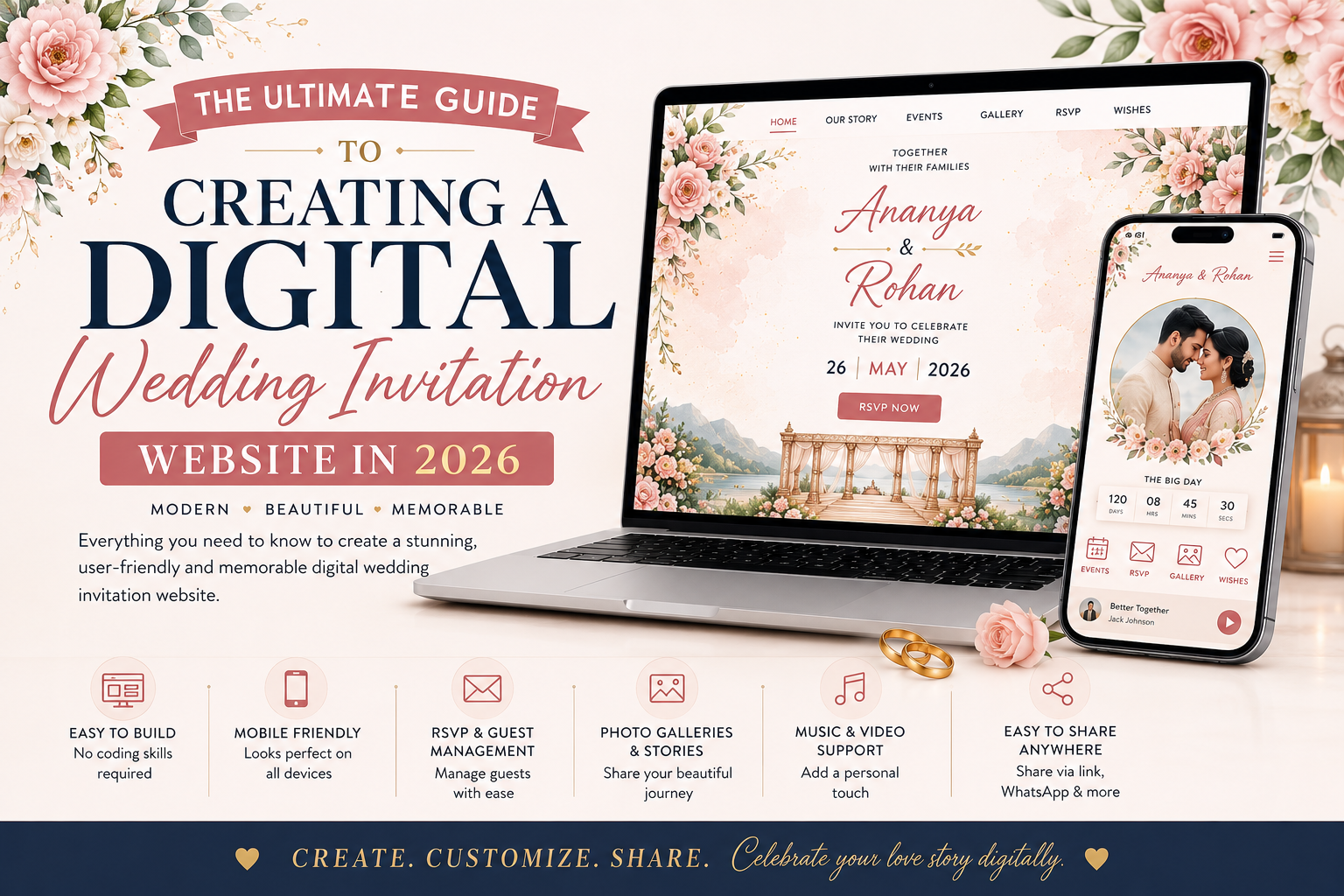
How to Create a Wedding Website That Guests Will Actually Use

Your wedding website is more than a digital placeholder. Done well, it becomes the central hub for everything your guests need to know, from venue directions to accommodation options, dress codes to RSVP confirmations. In an era where guests expect instant access to information, a well-designed wedding website eliminates confusion, reduces the flood of repetitive questions, and gives your celebration a polished, cohesive identity before the first ceremony even begins.
Table of Contents
- Why Every Couple Needs a Wedding Website
- What to Include on Your Wedding Website
- Choosing the Right Platform
- Design Tips for a Beautiful Wedding Website
- Setting Up Your RSVP System
- Privacy and Security Considerations
- How to Share Your Wedding Website
- Keeping Your Website Updated
- Expert Tips
- Common Mistakes
- FAQ
Why Every Couple Needs a Wedding Website
Think about the last time you attended a wedding. How many times did you call the couple or their family to ask about parking, dress code, or whether children were invited? A wedding website answers all of these questions before guests even think to ask them. It also serves as a living document that you can update as plans evolve, without reprinting a single card.
For Indian weddings with multiple ceremonies across different venues and days, a wedding website is practically essential. It keeps all event details organized in one place and ensures that guests attending only specific ceremonies have accurate information without requiring you to send multiple separate communications.
What to Include on Your Wedding Website
The Basics
- Your story: How you met, your proposal story, and what makes your relationship unique
- Event schedule: All ceremonies with dates, times, and venues
- Venue information: Full addresses, Google Maps links, parking instructions
- RSVP form: With deadline, meal preferences, and plus-one details
- Dress code: Specific guidance including color restrictions if any
Helpful Additions
- Accommodation guide: Recommended hotels with room block information and booking links
- Travel information: Airport details, transportation options, and local tips for outstation guests
- FAQ page: Answers to the questions you know guests will ask
- Photo gallery: Engagement photos or childhood pictures of the couple
- Wedding party: Brief introductions to bridesmaids, groomsmen, and family members in the wedding party
- Gift registry: Links to your registry or preferred gifting options
- Local recommendations: Restaurants, attractions, and activities for guests traveling from out of town
Choosing the Right Platform
Several platforms offer wedding website creation, but they vary significantly in features, design quality, and pricing. When evaluating options, consider these factors:
| Feature | Why It Matters |
|---|---|
| RSVP management | Automated tracking saves hours of manual follow-up |
| Mobile optimization | Most guests will view on smartphones |
| Custom domain | yourname.com looks more professional than platform.com/yourname |
| Password protection | Keeps your personal details private from non-guests |
| Indian wedding templates | Designs that reflect your cultural aesthetic |
| Multi-event support | Essential for weddings with multiple ceremonies |
Jobitra is built specifically for Indian weddings, offering templates that incorporate traditional design elements alongside modern functionality. Its integrated RSVP system, digital invitation tools, and guest management features make it a comprehensive solution rather than just a website builder.
Design Tips for a Beautiful Wedding Website
Your wedding website should feel like an extension of your wedding aesthetic. Here is how to achieve a cohesive, beautiful design:
- Use your wedding color palette: Consistency between your invitations, website, and decor creates a unified experience
- Choose high-quality photos: Blurry or poorly lit images undermine an otherwise beautiful design
- Keep navigation simple: Guests should find any information within two clicks
- Use readable fonts: Decorative script fonts look beautiful in headers but are hard to read in body text
- Optimize for mobile: Preview your website on multiple devices before sharing
- Keep it updated: An outdated website with wrong venue details causes real problems
Setting Up Your RSVP System
The RSVP section is the most functionally important part of your wedding website. A well-designed RSVP form collects everything you need for planning without overwhelming guests with too many questions.
Essential RSVP fields include: guest name, attendance confirmation (yes/no), number of guests attending, meal preference (if applicable), and any dietary restrictions. Optional fields might include song requests for the DJ or a message to the couple.
Set your RSVP deadline at least 3 weeks before the wedding. This gives you time to follow up with non-responders and provide final numbers to your caterer and venue.
Platforms like Jobitra automatically compile RSVP responses into a dashboard where you can see attendance numbers, meal counts, and dietary requirements at a glance. This eliminates the need for manual spreadsheet tracking and ensures your caterer always has accurate numbers.
Privacy and Security Considerations
Your wedding website contains personal information including venue addresses, event schedules, and family details. Consider these privacy measures:
- Password-protect your website so only invited guests can access it
- Avoid posting your home address publicly
- Be cautious about sharing your website URL on public social media
- Use a wedding-specific email address rather than your personal one for guest communications
How to Share Your Wedding Website
Include your wedding website URL on your Save the Date and formal invitations. For digital invitations, make the URL a clickable link. You can also share it directly via WhatsApp with a brief personal message.
Consider creating a short, memorable URL. Instead of a long platform-generated link, use a custom domain like yournames.com or a short link service to create something guests can easily remember and type.
Keeping Your Website Updated
Your wedding website is a living document. Update it whenever plans change, and add new information as it becomes available. Common updates include: venue parking instructions once confirmed, accommodation room block details, updated ceremony timings, and weather contingency plans for outdoor events.
After the wedding, many couples update their website with professional photos and a thank-you message, turning it into a lasting memory of their celebration.
Expert Tips
- Launch your website when you send Save the Dates, not when you send formal invitations
- Include a FAQ page that answers the 10 questions you expect most frequently
- Add a countdown timer to build excitement as the wedding approaches
- Test every link and form before sharing the URL with guests
- Assign one person to monitor the RSVP dashboard and follow up with non-responders
Common Mistakes
- Launching too late: Guests need time to make travel and accommodation arrangements
- Forgetting to update: Outdated information causes confusion and unnecessary calls
- Overcomplicating the design: Beautiful simplicity beats cluttered complexity every time
- No password protection: Public websites expose your personal details to anyone
- Missing mobile optimization: If it does not look good on a phone, most guests will struggle to use it
Frequently Asked Questions
Do I need a wedding website if I am sending physical invitations?
Yes. Physical invitations have limited space for information. A wedding website allows you to provide comprehensive details, answer common questions, and collect RSVPs digitally, even if your initial invitation is printed.
How early should I create my wedding website?
Create your website when you send Save the Dates, typically 3-6 months before the wedding. This gives guests time to note the date and access preliminary information while you finalize remaining details.
Can I use my wedding website for multiple ceremonies?
Absolutely. Platforms like Jobitra support multi-event wedding websites where you can list each ceremony separately with its own date, time, venue, and RSVP option. This is particularly valuable for Indian weddings with Mehendi, Sangeet, Wedding, and Reception events.
What happens to my wedding website after the wedding?
Most platforms allow you to keep your website active after the wedding. Many couples update it with professional photos and a thank-you message. You can also download your RSVP data and guest information before the website expires.
Conclusion
A wedding website is one of the most practical investments you can make in your wedding planning process. It reduces guest confusion, automates RSVP tracking, and gives your celebration a professional, cohesive presence before the first ceremony begins.
Create your wedding website today with Jobitra — India's premium wedding platform offering beautiful templates, integrated RSVP management, digital invitations, and everything you need to plan your perfect celebration. Get started at jobitra.com.